Destinations India offers online reservation for Temples and Tigers of India tour itinerary, India

  Destinations India                                                                     Tourism and Travel Places in India

Destinations IndiaDestinations IndiaDestinations India
Home
   Know India Better   Taj Mahal   Golden Triangle   Coach Tours to India   Hill Resorts in India
   Palaces of India   Wildlife Tours of India   Kerala Backwaters   Palaces on Wheels   Adventure Tours of India

Trinetra's Special Price Tours

   Best of India, Nepal and Tibet
   Best of India
   Best of Kerala
   Best of South India
   Golden Triangle with Himalayas
   India- Short and Sweet
   India- By Day and Night
   Jewels of the Crown
   Kerala Delights
   On the Lord's Footsteps
   South India Explorer
   Taj and Tigers
   Temples and Tigers of India
   The Crowning Glory Tour of India
   The Spirit of India Tour
   Tigers, Palaces and Beaches of      India
   Tigers, Temples and Rajasthan      Heritage
   Rajasthan Heritage and Goa
   Rajasthan Heritage with Varanasi
   Romantic Rajasthan
more..  

Home
Know India Better
Palaces of India
Taj Mahal
Wildlife Tours of India
Golden Triangle
Kerala Backwaters
Coach Tours to India
Palaces on Wheels
Hill Resorts in India
Adventure Tours of India
Tour Packages
Highlights | Itinerary

Temples and Tigers of India

Day 01: Arrival / Delhi

Meeting and assistance upon arrival as our representatives welcome you and escort you to your car.

Whilst the room keys and check-in is organized, our representative would introduce the tour to you and hand over rest of the documents to you.

Welcome to our Tour, or as we say 'atithi devo bhava' (the guest is an incarnation of God). Thank you for giving us the opportunity to serve you !

Day 02: Delhi /Varanasi (Shiv Ganga Express: 1845/ 0745*)

Following breakfast, we proceed on a guided tour of New Delhi, Visiting such sights as Bahai Temple, Humayun's Tomb (1586) , the Qutab Minar 72 meters high and one of the most perfect towers in the Persian world. The Iron Pillar which has survived the vagaries of weather for over 1500 years. Continue with a drive through Embassy area, the Government buildings (1921-1930) and Connaught Place, the heart and main shopping district of the capital.

Afternoon we cross the city and into the walled gates of the Old city with visits to the Jamma Mosque (1650) and drive through the fabled area of Chandni Chowk (aptly translates to Moonlight Square) where the throngs of shoppers and vendors meet in the oldest area of Delhi. Visit the Red Fort (1639-1648 built by Shah Jehan the builder of the Taj Mahal in Agra) to view the inlaid and carved Royal Chambers, on to Raj Ghat and nearby ghats where the founder of the nation, Mahatma Gandhi and thereafter Indira Gandhi and Rajiv Gandhi were cremated.

The highlight of this tour would be a ride on cycle rickshaws. Now these are 3-wheel cycles with a sofa seat at the back. The Rickshawalla (Rickshaw driver) sits on a small cushion in the front and two passengers on the sofa seat behind. This is a remarkable way to explore and picture the hustle and bustle as well as the colour of the narrow winding streets bursting with people and pavement shops selling wares of all description - including a laughing set of dentures. The ride would be accompanied by peals of laughter both from the passengers as well as the onlookers.

Later in the evening transfer to the Railway station to board an overnight train (SHIVGANGA EXPRESS - 1845 / 0745*) to Delhi

Day 03: Arrive Varanasi

Meeting and assistance upon arrival and transfer to your Hotel Clarks

Varanasi is quite possibly the world's oldest living city. Religious artifacts link it to the sixth century B.C. Said to be founded by Shiva, Varanasi's Vedic affiliation goes back to the beginning of time. It is also a city of many names. The present name, Varanasi (derived from the names of two nearby rivers) is mentioned in the Mahabharata. The ancient name is Kashi, the City of Light. To the devout it is also called Kashika, the shining one, referring to the light of Shiva. Many others prefer the anglicized Benares. Revered by Hindus, Buddhists and Jain alike, Varanasi is considered the holiest city in all of India. It is presided over by Shiva in his manifestation as Vishwanatha, Lord of the Universe. Buddha delivered a sermon in nearby Sarnath and Mahavira, the founder of Jainism, lived in Varanasi. As a result, more Indians will make a pilgrimage to Varanasi in their lifetime than any other place.

On your agenda this afternoon are several temples and the Hindu University at Benares. First stop would be the Bharat Mata (temple of Mother India). Inaugurated by Mahatma Gandhi, it features a huge marble map of India on the ground floor. Next up, the Durga Temple known for its bright red color and the playful, if sometimes aggressive, monkeys that run amok there, the Durga Temple is one of the most imposing architectural monuments in Varanasi.

The university, which occupies a large piece of land at the southern end of town, is also home to the New Vishwanatha Temple. The New Temple is modern in design and open to Hindus and non-Hindus alike. Surrounded by palm trees, it is a splendid white marble structure that shines in the afternoon sun against a pale blue sky. Inside, the temple is spacious and airy. The interior walls are covered with Vedic art above inscriptions from the Bhagavad Gita and Upanishads. In the center of the first floor is the Shiva linga

This evening we take a short trip to the Buddhist city of Sarnath .It is here that the Buddha preached his first sermons after attaining enlightenment. The highlight of this tour would be a participation in the evening prayer service (aarti) of the main Buddhist temple here - the synchronized chanting of himns to the accompaniment of traditional temple music is a sole stirring experience.

Day 04: Varanasi / Khajuraho (9W 723 - 1220 / 1300)

At dawn we visit the sacred Ganges for a boat ride. Every morning at dawn hundreds of worshippers can be seen bathing in the sacred waters. The great river banks are lined with an endless chain of stone steps-the ghats-that stretch from one end of the city to the other. The Ghats form an impressive part of the religious landscape of the city. Proceeding downstream at a leisurely pace, you would be pointed out the significant temples and buildings as well as the changing architectural style. Life and death go hand in hand in Varanasi. While young people seek prosperity and protection from harmful influences, the older generation comes to Varanasi to cleanse their souls in the forgiving waters in preparation for their ultimate dissolution. Believing that anyone who dies in the river of life in Varanasi gains freedom from the cycle of birth and death, the City of Light has become a haven for the sick and aged waiting out their final days. The smoke that billows from the crematoriums on the edge of the river gives testimony to their final release from life's earthly confines. We would docked our boat at Manikarnika (Cremation) Ghat. On any given day, anywhere from a few dozen to a few hundred corpses are cremated here, The ghat is assiduous with activity as the cremated bodies threw up smoke and fire.

Following the boat ride we set off on foot to explore the inner city. Through a twisted maze of narrow alleys, home to numerous shrines and pilgrim shops, we walk back a few centuries. Life here has stood still for years. The homes, the shops and even the cattle have not changed over the centuries. It is a brilliant nostalgic experience of timelessness!

Late morning transfer to the airport for your flight to Khajuraho.

Meeting and assistance on arrival and transfer to the Hotel Usha Bundela

This tiny village is famous for its remarkable complex of temples built in an inspired burst of creativity between 950 and 1050 AD under the Chandela kings. Of the original 85, only 25 survive and each is a masterpiece dedicated to different deities. The temples were lost among the forest for centuries and were accidentally discovered by a British army engineer in 1858. The presence of erotic temple sculpture, which accounts for less than 10% of the total carvings, has resulted in many theories. The most popular being that the Chandelas were followers of the Tantric cult which believes that gratification of earthly desires in a step towards attaining moksha or release from the cycle of rebirth.

Legend has it that one sultry summer night, Hemavati, the widowed daughter of king of Varanasi was bathing in the lake when the Moon God saw her beauty. The son born out of their unity was Chandravarman, who grew up to the founder of the Chandela dynasty. In order to atone her mother's lapse , he raised temples that celebrated the union of the Purush and Prakati, man and nature as the source of all life.

We have a full afternoon to explore these temples at leisure, their remarkable sculptures are unique in that they show great sensitivity and warmth displaying one aspect of Hinduism - a genuine love of life.

Day 05: Khajuraho / Bandhavgarh

We drive early this morning with packed breakfast for Bandhavgarh Tiger Reserve.

Bandhavgarh National Park, situated amid the airy Vindhya hills of Madhya Pradesh, has established a reputation as one of the best places in India to observe Tigers. Although a relatively small reserve when first established in 1968, it was enlarged twenty years later to include adjacent tracts of Sal forest and this extension has proved very beneficial for the Tiger population. The 105 square kilometres of park area, open for tourists is estimated to have a population of 22 tigers, a density of one tiger for every 4.77 square kilometres.

Like many Tiger reserves in India, the area was formerly the hunting reserve of a Maharaja and contains much evidence of its royal associations, most spectacular being the ruins of a huge hilltop fort which dominates the centre of the reserve. Bandhavgarh is somewhat isolated in the rural heart of India but the long overnight train journey from Delhi is well worth the effort and visitors are richly rewarded by a fine selection of wildlife and the real chance of never to be forgotten encounters with the greatest of the big cats.

Upon arrival check into Your Resort

Late afternoon (Subject to your time of arrival), enter the park to search for wildlife.

Day 06: Bandhavgarh Tiger Reserve

The pattern of early morning and afternoon excursions will be interspersed with periods of relaxation back at our accommodation during the heat of midday. Although Tigers are the star attraction at Bandhavgarh the supporting cast of mammals and birds is very impressive, the latter including such species as Grey-headed Fishing Eagle, Plum-headed Parakeet, Malabar Pied Hornbill, Greater Racket-tailed Drongo and Asian Paradise Flycatcher among a total of over 250 species recorded in the district. Tour members with an interest in ornithology will value the time between game drives as an opportunity to explore some of the habitats close to our base.

Tigers, and the more rarely seen Leopards, have no shortage of prey in the reserve. The Spotted Deer or Chital is a favourite item on the Tiger menu and several thousand of these delightful deer inhabit the park.

Other species found here in varying abundance include; Chinkara, Chowsinga, Wild Boar, Sambar, Muntjac and Nilgai. Herds of the Asian Bison, or Gaur, formerly Inhabited the Reserve but impressive beast has not been seen at Bandhavgarh since 1998 although a closely monitored programme for the reintroduction of the Gaur is planned within couple of years. A hunting pack of wild dogs may also be seen on occasions. Mammal sightings always require a degree of luck, particularly when the species is essentially nocturnal or reclusive but each outing in the reserve will at least provide a chance to meet one of the rarer inhabitants such as Sloth Bear, Indian fox, Jackal, Wolf, Ratel, Striped Hyenas, Jungle Cat or Indian Pangolin. More predictable are the sounders of Wild Boar rooting among the vegetation, Indian Hares, the lively little Palm Squirrels which seem to be constantly in a state of agitation, and several members of the mongoose tribe. Common Langurs and Rhesus Macaques are also plentiful, the former enjoying an elevated view of the forest as they devour their favourite leaves and often the first creature to bark out a warning at the appearance of a Tiger below.

We are never short of wildlife to watch in this gem of a reserve.

Day 07: Bandhavgarh / Umaria
Umaria / Agra (Kalinga Utkal Express - 0850 / 0630*)

Morning we visit Tiger Reserve.

Evening transfer to the Umaria train station to board your overnight train to Agra

Overnight: Two Tier Air-Conditioned Sleeper Accommodation.

Day 08: Arrival / Agra

Meeting and assistance upon arrival and transfer to your Hotel Yamuna View, formerly the 5* Agra Ashok

Following rest and relaxation we ride to the massive Agra Fort. The elegant buildings inside reflect an interesting synthesis of Hindu and Central Asian architectural styles. Built by Emperor Akbar, the maze of the courtyards, mosques & private chambers of the fort echo the story of the Mughal Empire. The Moti Masjid & other magnificent buildings reflect the skill of the ancient Indian architects.

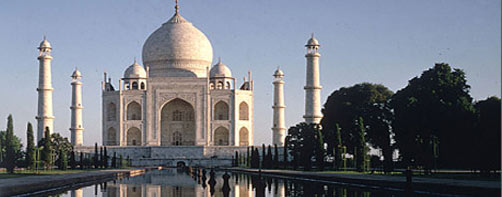
Agra is the city of the Taj Mahal, perhaps the most photographed monument in the world. However, there is a degree of enigma about the Taj. Once you hear about a building so much and once you see so many pictures of a building your expectations are real high; and this is the enigma about the Taj Mahal. No matter how many pictures you have seen or no matter how high your expectations are the Taj never lets you down - the unparalleled glory and beauty of the building surpasses beyond all human imaginations. At sun set we visit the Taj Mahal to witness this spectacular monument built for love. Besides perfect symmetry in every aspect of its construction, the inlay work of semi precious stones into marble in pietra dura style is absolutely remarkable.

Day 09: Agra / Fatehpur Sikri/ Ranthambore

Following breakfast, drive to Ranthambore enroute visiting Fatehpur Sikri. This abandoned capital of the Mughals is a perfectly preserved city at the height of the empire's splendour. The city is divided into religious and secular sections. The profusion of sculpture is breathtaking. Also, the white marble mosque in the secular section is incredible. It is a very sacred mosque and pilgrims from far and near arrives here to pay their respects.

From here we continue our ride to Ranthambore Park. Easily accessible, this popular park is one of India's best places for viewing tigers and their prey.

Upon arrival, check in to Hotel Tiger Moon Resort, which gives you all the excitement and exhilaration of holidaying in the heart of the Indian wildlife; right where all the action is, in the lap of Nature at it's most raw. Here the law of the jungle prevails; predators prowl the wild pathways ; birds shriek in the skies and reptiles slither across the earth. It is into this wilderness that we offer you ringside seats to the ultimate show. This resort, situated on the edge of the Ranthambor National Park amidst the Aravali hills in Rajasthan, is the ideal resort if you want to hit the tiger trail.

Overnight Tiger Moon Resort - (B, L, D)

Day 10: Ranthambhore

Morning and evening jungle excursions in open top vehicles. Ranthambore is known to have India's Friendliest tigers Assured of protection , these nocturnal creatures are seen often in the day.Sprawled on the Aravalli and Vindhya ranges of Rajasthan , Ranthambore National Park encompasses an area of 410 sQ km in which live a healthy population of about 40 tigers. A large number of deer inhabit the area and leopards are occasionally sighted. The Pandam Taloa Lake, located adjacent to the jogi Mahal hunting lodge, is the park's favorite water source. Smaller pools at Raj Bagh and Milak also attract a variety of wild life The best way to explore Ranthambore is in a jeep as the park is well connected by arterial roads and tracks . Some of the popular sighting areas are Nal Ghati, Lahpur, Bakuala, Anantpur and the Kachida valley Mammals: Tiger, Panther, Hyena, Jackal, Jungle Cat, Caracal, Sloth Bear, Sambar, Chital, Nilgai, Wild Boar, Chinkara, Indian hare mongoose. Birds : Bonelli's eagle, crested serpent eagle, great Indian horned owl, grey partridge sandgrouse, quail, spurfowl, common peafowl, tree pie, paradise flycatcher, pheasant tailed jacana, painted stork, black stork, spoonbill, green pigeon, ducks

Day 11: Ranthambore / Jaipur

Morning, Jungle excursion in open Top Vans

Following breakfast this morning drive to Jaipur. Upon arrival, check into fine quality Heritage Hotel- Alsisar Haveli. This is the flagship hotel in a bouquet of heritage hotels. The Haveli lies tucked away in the heart of pink city, Jaipur. It brings back to life the grandeur of the old days and is a memorable regal Rajasthani experience for the guests. Refurbished in 1982, the Haveli incorporates the finesse of traditional Rajput architecture and a site to behold. The large elevated platform that dominates the central area of the ground floor and once used for get-togethers by the gents of the house is now open to guests who can witness puppet shows and folk dances while enjoying their snacks or drinks. The spacious lobby which opens into the chowk (inner courtyard), was a century ago used by the ladies of the house and is now open to guests

Evening, we explore the unending shopping options of Jaipur.. An essential starting point for Rajasthan craft work is block making and block printing and we will be exploring the process from start to finish in some of the popular stores here. The opportunity also exists here to tailor make outfits to your design and size.

We also explore one of the chief attractions of Jaipur - its jewelry, which offers a variety that ranges from chunky tribal jewelry to enameled gold to modern diamond jewelry. Kundan (art of stone setting) and enamel jewelry has been a specialty of Rajasthan, particularly that of Jaipur. The stones are embossed into decorative shapes & patterns and embellished with delicate enamel ornamentation in the champeve (raised field) technique. Jaipur is well known for its gold and silver enameling. Colorful bangles made of lac and set with semiprecious stones make an inexpensive buy. The craftsmen take great pains to embed the hundreds of stones into the lac. The skilled gem-cutters of Jaipur carve enchanting little animals and birds from rock, crystal, jade, smoky topaz and amethyst. Intaglio beads & buttons and crystal scent bottles are also available.

Day 12: Jaipur

This morning we visit Amber Fort, the former capital of the royal Jaipurs. Few fail to be moved by the dramatic Rajput grandeur of this hilltop fortress-palace 11 km north of Jaipur. Set on the dry wrinkled Aravali Hills, and surrounded by fortified battlements, the palace straddles two sepia-hued tundra hills overlooking Maota Lake, and its sprawling crenellated walls lattice the surrounding hills.

We will ride up to this hilltop palace on a caparisoned, painted elephant, passing through the ancient main gate where Maharajas of Jaipur have entered for four hundred years. Our guide will elaborate on the history of this architectural masterpiece with its mirror-studded alcoves, dazzling mosaics and water-cooled swings that delight today's visitors as they did their former royal residents.

We shall visit the Hawa Mahal or Palace of the Winds, a five-storied structure of pink sandstone with semi-octagonal and delicately honeycombed windows overlooking the main street of the old city. It was built in 1799 so that veiled royal women could peer down unseen by the world through its 593 stone screens.

Following lunch, a tour Of City Palace & Observatory. The City Palace in the heart of the old city is a blend of Rajasthani and Mughal architecture. The centre of the palace is a seven storied building called Chandra Palace, with fine vies over the gardens and the city. The palace lies in the heart of the city and occupies the whole central grid. The fortified wall has seven gates and was built for protection from invading armies and animals that lived in jungles which surrounded the wall that time. Next, we visit the Solar Observatory - an astronomical treasure house, with solar device that give accurate predictions till date. The Palace Of Winds, a five-storied structure of pink sandstone has semi-octagonal and delicately honeycombed windows overlooking the main street of the old city.

Day 13: Jaipur / Delhi

Following a leisurely breakfast, drive to Delhi, along one of India's finest freeways. We will have opportunities to stop on the way at well-appointed restaurants for refreshments as well as restroom services.

Upon arrival check into your Hotel The Connaught.

Home Visit & Dinner With Family: This evening we visit and Indian family for an Indian home experience. The evening is designed to give you a 'feel' and insight into Indian family life as well as experience typical Indian hospitality and home made Indian food.

Day 14: Departure / Delhi

Today transfer to the International airport in time to board flight back home

Indicative Low Season Cost Based on 02 People Traveling Together: - USD 1459 Per Person

Cost Includes: Accommodation on Twin Sharing basis at hotels as per itinerary; Daily American Breakfast; Dinner with Indian Family; All Meals at Ranthambore & Bandhavgarh; Jungle Excursion in opened top Vehicles/Elephants + Entrances to the Park; Air-conditioned Deluxe Toyota SUV at disposal for all journeys and tours as per itinerary; Local guides / Naturalist for city tours; First Air-conditioned sleeper accommodation for Delhi / Varanasi Overnight train journey; Two Tire Air-conditioned sleeper accommodation for Umarai / Agra Overnight Train Journey; Elephant Ride at Amber Fort; Inner India Airfare for Varanasi / Khajuraho Sector in Economy Class; Meet and greet services.

Destinations India offers online reservation for Temples and Tigers of India tour itinerary, India. For details please fill up the form given below.